Apple Sponge Roll
Source/Author: Mary
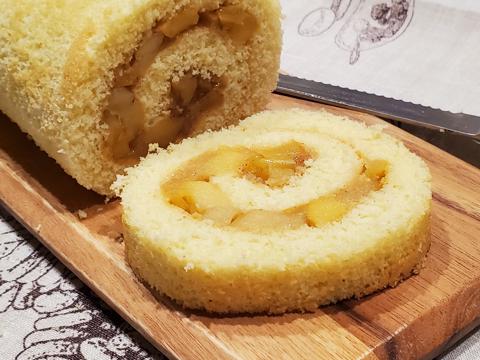
This light and tender sponge roll is filled with soft cinnamon apples and rolled while still warm to create the perfect spiral. The sponge stays flexible, moist, and fluffy, while the apple filling provides just the right balance of sweetness and freshness. With a few simple bakery tricks, this recipe is reliable enough for beginners yet elegant enough for any dessert table.
Ingredients:
| • salt | 1 pinch |
| • butter | 30 grams |
| • vanilla extract | 1 teaspoon |
| • All-purpose flour | 100 grams |
| • baking powder | 1 teaspoon |
| • eggs | 4 large |
| • lemon juice | 1 tablespoon |
| • granulated sugar | 120 grams |
| • ground cinnamon | 1 teaspoon |
| • apples | 3 medium |
| • cornstarch | 20 grams |
| • granulated sugar (for filling) | 2 tablespoons |
1. Preheat the oven to 350°F (175°C). (Professional bakeries often bake sponge rolls at a slightly higher temperature (360–375°F / 180–190°C) for a shorter time. This sets the structure quickly while keeping the sponge moist.
)
2. Line a 10 × 15-inch jelly roll pan with parchment paper. Lightly grease the parchment.
3. Peel the apples. Remove the cores. Cut the apples into small cubes.
4. Melt the butter in a skillet over medium heat. Add the apples. Stir in the sugar, cinnamon, and lemon juice. Cook for about 8–10 minutes, stirring occasionally, until the apples are just tender.
5. Transfer the filling to a plate and allow it to cool completely.
6. Crack the eggs into a large mixing bowl. Add the sugar, vanilla, and salt.
7. Beat with a mixer on high speed for 8–10 minutes until the mixture becomes very pale, thick, and triples in volume.
8. Sift together the flour, cornstarch, and baking powder.
9. Fold the dry ingredients into the egg mixture in three additions using a rubber spatula. Fold gently until no streaks of flour remain. Do not overmix.
10. Pour the batter into the prepared pan. Spread evenly with an offset spatula.
11. Tap the pan gently on the counter two or three times to remove large air bubbles.
12. Bake for 10–12 minutes.
13. The sponge is ready when it springs back lightly when touched and is just beginning to turn golden.
14. While the cake bakes, lay a clean kitchen towel on the counter and dust it lightly with powdered sugar.
15. As soon as the sponge comes out of the oven, loosen the edges with a knife.Turn the sponge onto the prepared towel.
16. Carefully peel away the parchment paper.
17. Starting from the short side, roll the sponge together with the towel.
18. Allow it to cool completely while rolled.
19. Carefully unroll the sponge.
20. Spread the cooled apple filling evenly over the cake, leaving about ½ inch (1 centimeter) around the edges.
21. Roll the sponge tightly without the towel.
22. Wrap the roll in plastic wrap.
23. Refrigerate for at least 1 hour before slicing.
24. Dust with powdered sugar before serving if desired.
TIPS & VARIATIONS:
- Cornstarch is the bakery secret. Replacing part of the flour with cornstarch makes the sponge softer and much more flexible.
- Beat the eggs long enough. Most sponge failures happen because the eggs were not whipped sufficiently.
- Fold the flour gently to keep as much air in the batter as possible.
- Roll the sponge while it is still hot. If it cools flat, it is much more likely to crack.
- Cook the apples just until tender. Overcooked apples release too much liquid and can make the sponge soggy.
- For extra moisture, brush the cooled sponge with 2–3 tablespoons of apple juice before adding the filling.
- This roll tastes even better the next day and stays soft for up to 2–3 days when wrapped well and refrigerated.
SERVING IDEAS:
Dust with powdered sugar.
Drizzle with warm caramel sauce.
Serve with lightly whipped cream.
Add vanilla ice cream for a warm-and-cold dessert.
Garnish with thin apple slices and a sprinkle of cinnamon.
BAKERY SECRETS:
Professional bakeries often bake sponge rolls at a slightly higher temperature (360–375°F / 180–190°C) for a shorter time. This sets the structure quickly while keeping the sponge moist.
Weighing the flour instead of measuring by volume gives much more consistent results.
Chilling the finished roll for an hour before slicing creates cleaner, sharper spirals.
A very thin, even layer of filling is better than a thick one. Too much filling is the main reason sponge rolls split.
If you're serving the roll the next day, wrap it tightly in plastic wrap as soon as it has cooled. This traps moisture and keeps the sponge exceptionally soft.